

Reading Between the Lines
Three Graphic Novels and the Soul of Soviet Jewry

The Jewish Comics Library of Seattle did not arrive fully formed. It grew the way all meaningful collections grow — through accumulation, accident, and the slow recognition that certain books insist on being read together. Fifty editions of Graven have been, in one sense, a record of that recognition: not reviews so much as dispatches from a curatorial practice I can only describe as phenomenological. I follow the resonances. I trust the juxtapositions. And occasionally, the collection reveals something to me that I did not plan.
That is what happened with Soviet Jewry.
In the last edition of Graven we featured Marx: A Tale of Neglect by Onrie Kompan, a graphic novel in which a grandson reconstructs his grandfather’s life navigating the wreckage of idealism under Soviet antisemitism. It was a strong book and a strong edition of Graven. What I did not fully anticipate was that it would act as a kind of gravitational center, pulling two other books into its orbit: Anna Olswanger’s A Visit to Moscow and Julia Alekseyeva’s Soviet Daughter. When read together, these three books constitute something I did not curate so much as stumble upon. It became an accidental mini-course on the relationship between Russian Jews and Communism, one of the most complex portraits of a complex relationship I have encountered in any medium.
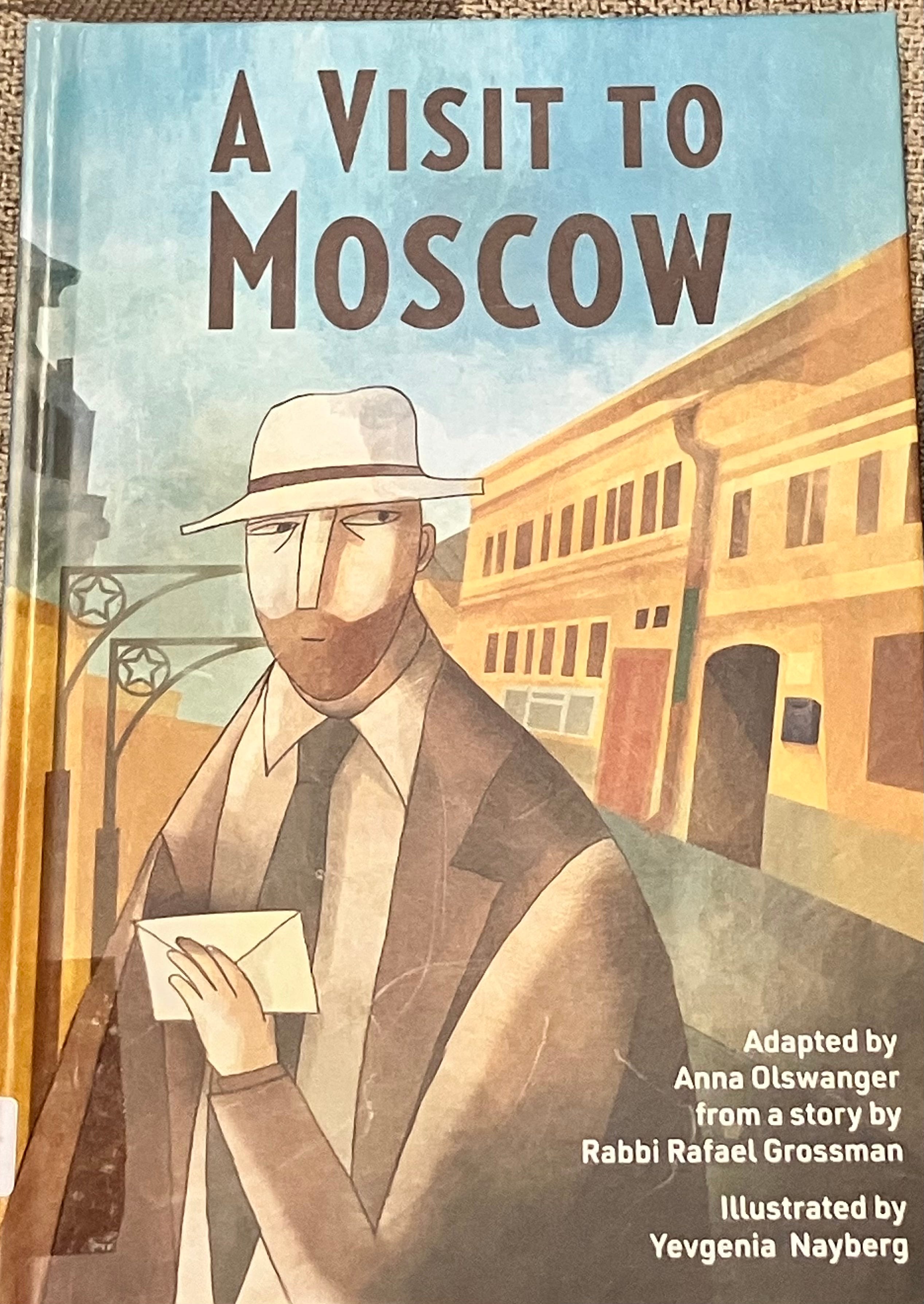
Complex, because it refuses uniformity. The monolithic “Soviet Jewish experience” dissolves almost immediately under the pressure of these three books. What emerges instead is a spectrum: from Alekseyeva’s great-grandmother Lola, who genuinely flourished under Soviet ideals even as she navigated their contradictions, to the Gurwitz family in A Visit to Moscow, so comprehensively broken by Soviet paranoia that they rarely left their apartment in a decade. Their last letter to family in America was also ten years ago. They had raised a ten-year-old boy who had never been on the street outside his own front door. Between those poles, Kompan’s grandfather occupies a middle position — a man who believed in the promise and paid for it anyway.
Same system. Radically different lives. The difference is not incidental; it is the argument.
The Transmission Problem
There is a structural pattern running through all three books that took me a while to name, but once named it becomes impossible to ignore. Each of these stories, Marx, Soviet Daughter, and the ur-text behind both of them, Maus, is an act of generational transmission. A younger person reaches back across time to recover an older person’s story. But the distance of that reach varies, and the variation matters enormously.
In Maus, Art Spiegelman is one generation from his subject. He sits across the table from Vladek, records his voice, and fights with him about the past and the present simultaneously. The proximity is both the gift and the burden. Art inherits his father’s trauma directly, and the friction between them, the frustration, the love, the guilt, is inseparable from the history being transmitted. You cannot read Maus without also reading the cost of survival on the survivor and on the person who grows up in a house full of PTSD.
In Marx, Kompan is two generations out. The grandfather is in a hospital bed at the end of his life. The grandson is trying to capture the essence of his grandfather’s life through memory, family narrative, and reconstructed history. The emotional register shifts accordingly, from friction to admiration, from argument to elegy. Kompan maintains what I would call a respectful distance: he honors his grandfather’s commitment and resilience without fully claiming the ideology for himself. The transmission is real but filtered.
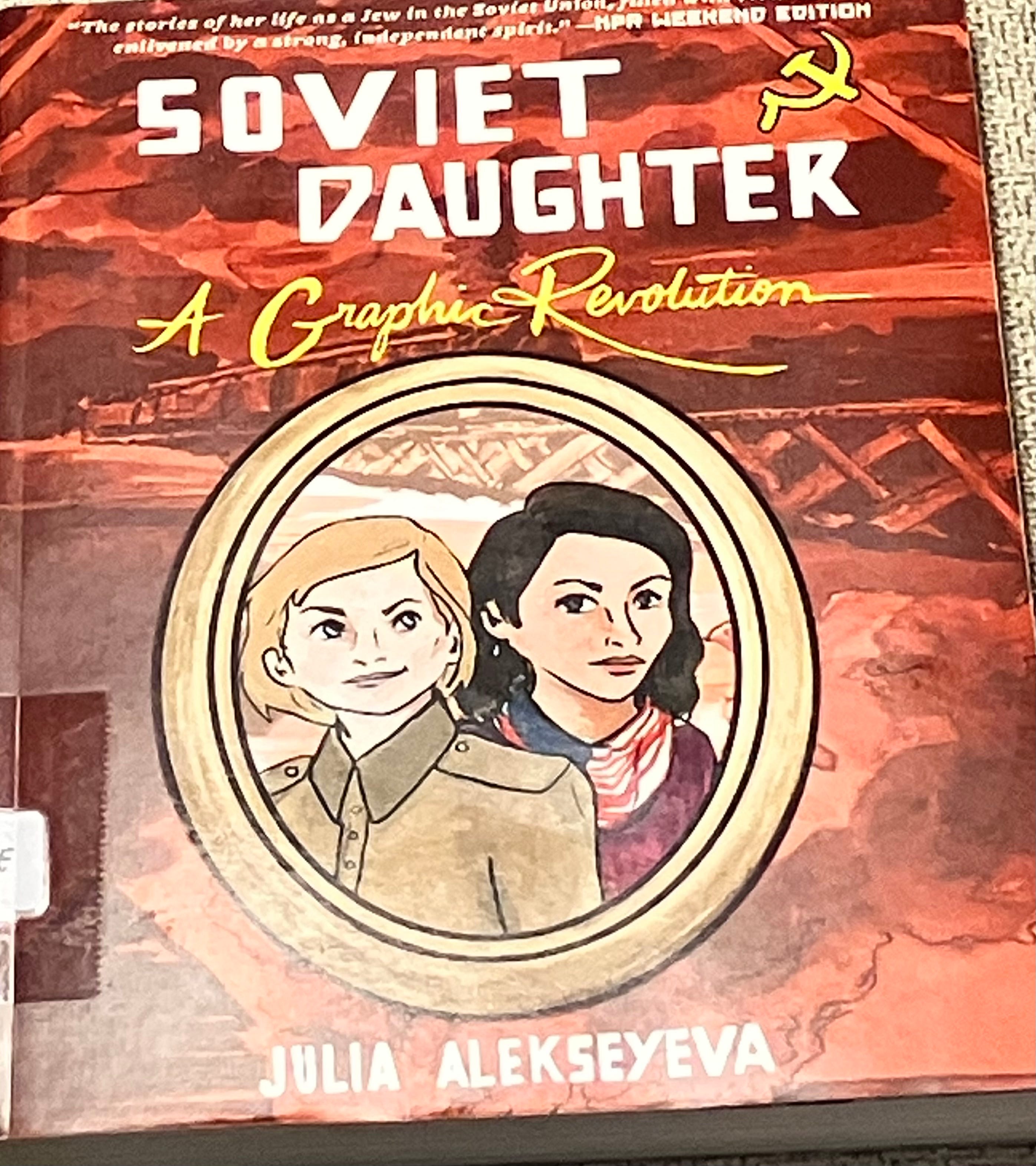
Then comes Alekseyeva, three generations out, reaching back to a great-grandmother, Lola, who lived to be 100. She encountered Lola’s story through conversation and a warm relationship that was more important to her than that of her own mother. But through a diary she reads after Lola’s death she learns of the life of Lola as a woman her own age. And something unexpected happens: the generational distance, rather than attenuating the connection, enables it. Julia does not just recover Lola’s whole story — she adopts it. She becomes, as a left-wing college professor in contemporary America, the ideological heir that the intervening generations could not be.
This is the ideology-skipping-generations phenomenon, and it deserves a moment’s reflection. Julia’s mother and grandmother, who also made the journey from Kiev to Chicago, learned the immigrant’s survival lesson: keep your head down, don’t advertise your Jewishness, don’t make yourself a target. The cautiousness that protected them in the Soviet Union followed them to America. But Julia, arriving in Chicago at age three, grew up at enough remove from that fear to look at Lola’s boldness without flinching. She came to a fuller understanding of Lola through her diary, already shaped into narrative, already curated by time. She found in it an unfiltered mirror. She got the essence without the friction.
Distance, it turns out, can be a form of intimacy.
The Outlier and Its Necessity
A Visit to Moscow breaks the pattern deliberately, and its presence in this triptych is precisely what prevents the collection from becoming sentimental.
This is not a memoir. There is no great-grandchild recovering a diary, no grandson reconstructing a life from family legend. Rabbi Grossman was asked by a congregant to contact her brother in Moscow, a man she had not heard from in ten years. What he found was the Gurwitz family: a husband and wife and their ten-year-old son, Meyer, who had spent his entire life inside the apartment where he was born. They did not write letters to the United States. They did not open the door more than necessary. They did not, as far as possible, exist.
Their paranoia was not irrational. That is what makes it devastating. Every precaution they took was a lesson learned from history, from neighbors who had disappeared, from the knowledge that being Jewish was itself a provocation. The Soviet system did not need to actively persecute the Gurwitz family. It had already done its work. They had internalized the surveillance so completely that the surveillance had become unnecessary.
Olswanger’s adaptation of this story — based on Rabbi Grossman’s own account — is appropriately external in its narrative mode. We observe the Gurwitz family; we do not inhabit them. The book’s visual language matches this epistemological position: distorted realism, clear lines that are not quite plumb, color doing the heavy lifting for emotional register. It is a book that witnesses rather than remembers, and the distinction is felt on every page.
Against the interiority of Soviet Daughter, with its loose washes over expressive line work, its compositions built around the page as a whole, its images in genuine service to Lola’s own words, the contrast is stark and instructive. Alekseyeva’s formal choices enact intimacy. Olswanger’s enact distance. Neither is a limitation; both are arguments.
The Portrait That Only Curation Can Produce
No single one of these books tells you what it was to be a Jew under Soviet Communism. Lola’s story alone would suggest that the system, for all its cruelties, offered real possibility to those willing to embrace it. The Gurwitz family’s story alone would suggest total, crushing suffocation. Kompan’s grandfather alone would suggest tragic idealism, the true believer betrayed.
Together they suggest something more honest: that the Soviet Jewish experience was not one experience. That ideology and identity intersect differently depending on geography, generation, temperament, and luck. That resilience, the thread connecting this triptych to the entire JCLS collection, takes radically different forms: Lola’s comes as bold engagement, the Gurwitz family’s as radical withdrawal, Kompan’s grandfather’s as commitment sustained past the point of evidence.
The graphic novel form, I would argue, is particularly suited to carrying this kind of testimony. Not because comics simplify, anyone who thinks that has not read Maus carefully, but because they combine the intimacy of the drawn line with the compression of the written word in ways that make the texture of ideological experience available in ways a historian’s monograph rarely manages. You feel what it meant to believe, or to fear, or to survive. The form does not explain the past; it inhabits it.
Which is, now that I think about it, more or less what a good collection does too.
Fifty editions in, I am still following the resonances. I still trust the juxtapositions. And I remain grateful for the moments when the books know more than the curator, when the collection, assembled in good faith over years, turns around and teaches you something you did not know you were building toward.
The Soviet Jewry triptych is one of those moments. I commend all three books to you without reservation, and suggest you read them in the order I have described: Marx first, then Soviet Daughter, then A Visit to Moscow. End with the boy who never left the apartment. Let that image sit.
Some lessons require the cold water last.
Our next Pop Up Library will be on Friday, April 10, 11:00 AM-3:00 PM at the Couth Buzzard Bookstore, 8310 Greenwood Ave N, Seattle. It is also a cafe that serves coffee, delicious baked things, lunch, beer and wine. So when you come to browse the shelves of JCLS or engage in a conversation about the collection, you can sip and nibble away.
NB - there will be no Pop Up Library on April 24.
We are proud to be funded by 4Culture, newsletter subscribers, and our patrons.
Another interesting post by Graven blog! Interesting to see a glut of memoirs about this part of Soviet Jewish experience. Ana Olswanger's A visit to Moscow is a beautiful book which I also covered on my blog. Yevegenia, her illustrator has just released her own memoir which I am looking forward to covering. I also have plans to speak with Julia Alekseyeva about Soviet Daughter. There is also I Wish I Didn't Have to Tell You This by Eugene Yelchin which I look forward to reading at some point.